
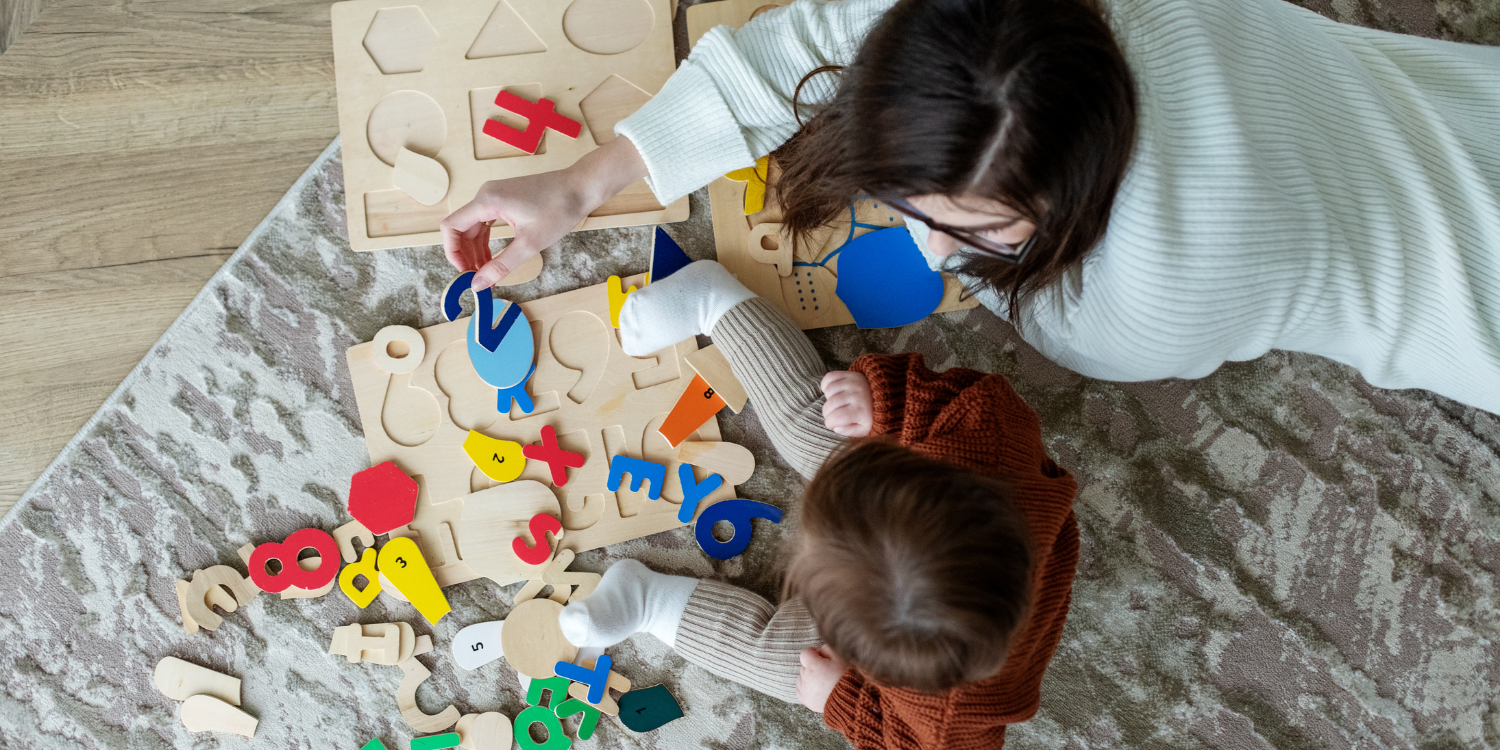
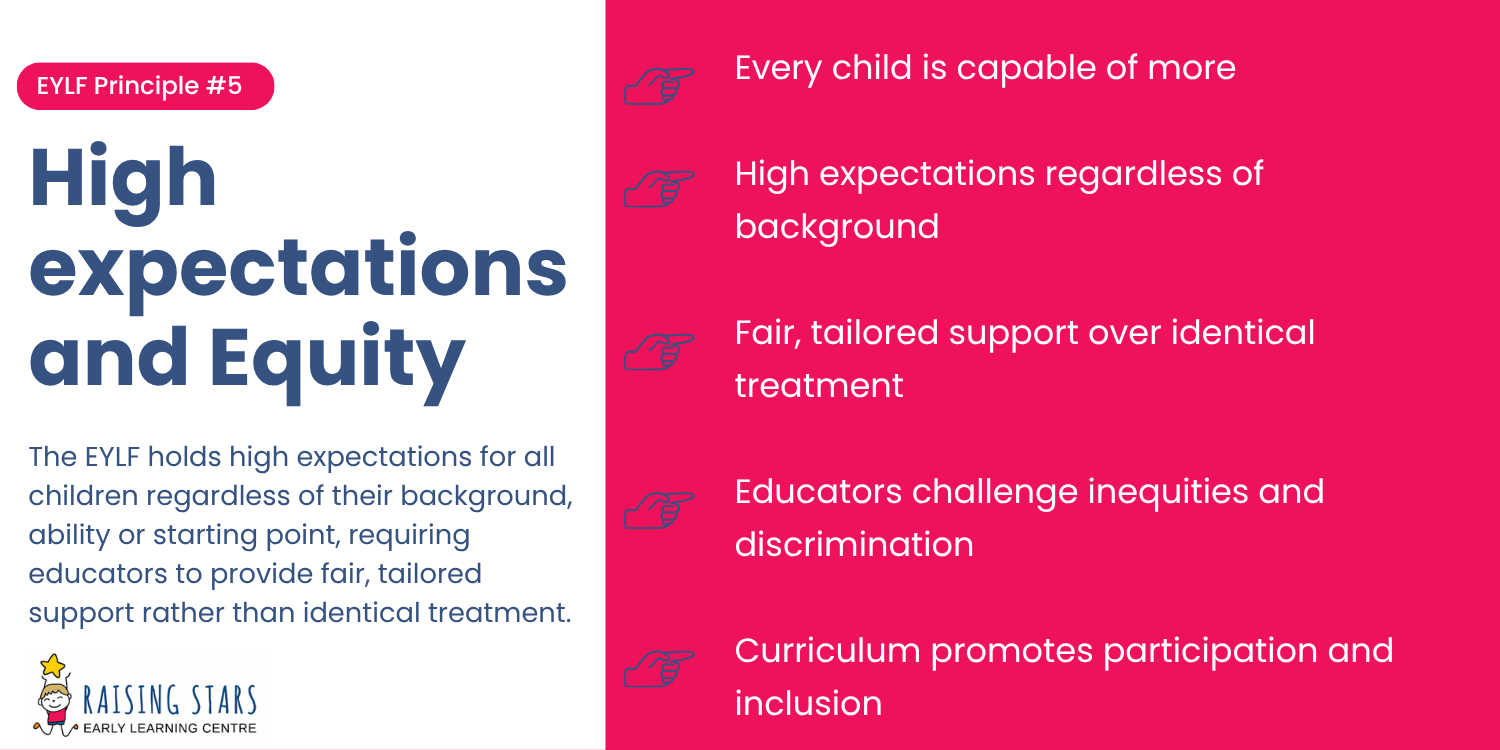
In the EYLF, high expectations and equity (expanded to equity, inclusion, and high expectations in V2.0) means that every child is capable of more than people sometimes believe they are – or give them credit for.
The Early Years Learning Framework (EYLF) holds high expectations for all children, regardless of where they come from, their ability, circumstances or what their starting point looks like. It requires educators to provide fair, tailored support – rather than identical treatment – to ensure all children have the best chance of reaching their full potential.
Staff are continuously developing their professional knowledge and skills and reflecting on their practices. Educators challenge practices that contribute to inequities or discrimination and make curriculum decisions that promote genuine participation and inclusion. They work in partnership with children, families, communities and other professionals, to continually find equitable and effective ways to ensure that all children have opportunities to achieve learning outcomes and flourish.
Equity vs. Equality: Why the difference matters
Equality means treating every person the exact same way and giving everyone identical resources or opportunities, no matter their starting point. Whereas equity recognizes that people have different needs and starting points, and adjusts those resources or opportunities. Equity gives individuals customized support and varying tools necessary to make sure everyone has the best opportunity to reach a fair outcome.
Equity means that educators recognize that fair does not mean treating every child the same. Some children need extra time, specific resources, or intentional adjustments to reach the same starting line. This can create a perception of favouritism or unfair treatment when one student receives more attention than another. However, the goal of this approach is to uplift everyone to be on a level playing field, understanding that some will naturally rise above. The intention is to provide greater opportunity for growth and development to those that have less to begin with or are starting from a place of disadvantage, be it social, financial, genetic or cultural.
The key elements of high expectations and equity
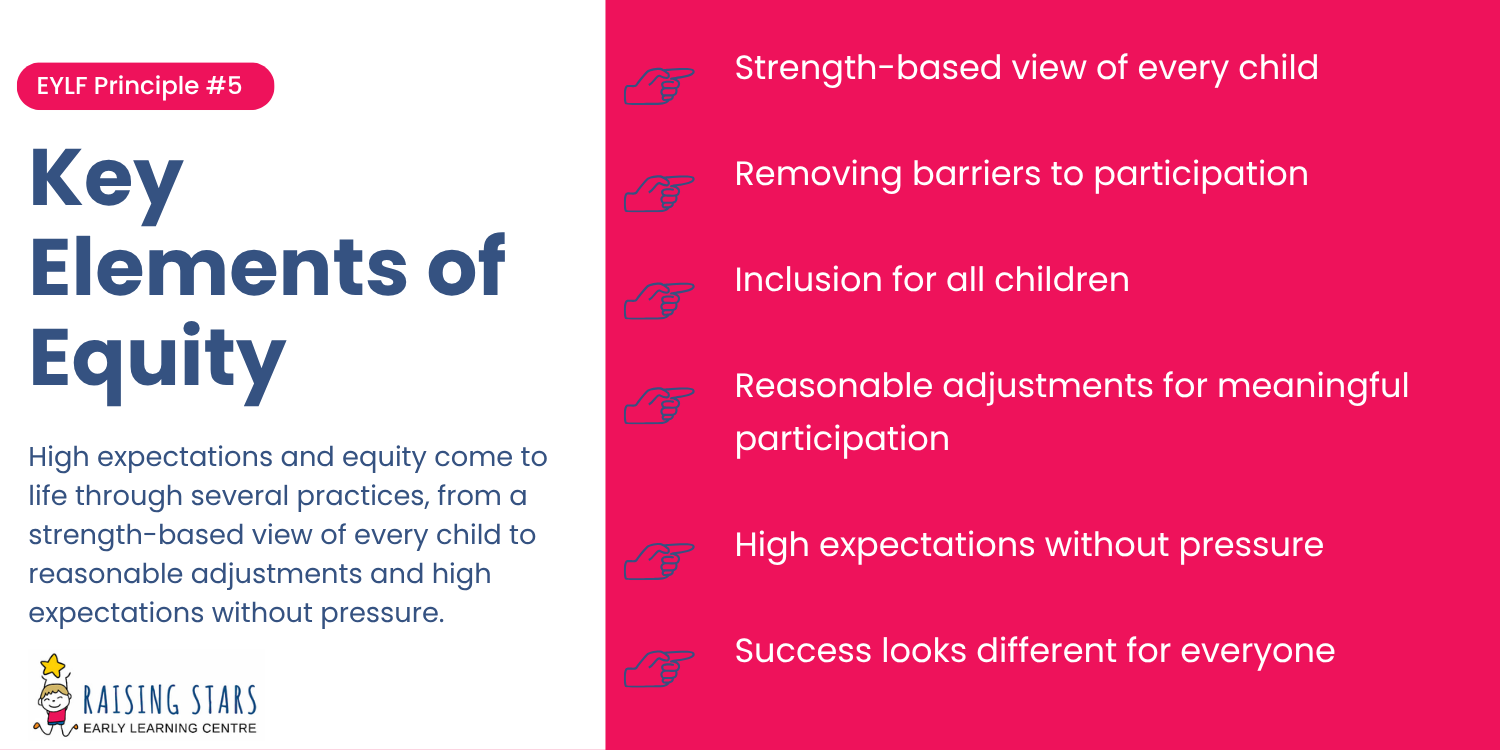
A Strength-Based View of Every Child
Focusing on what each child can do and building individual goals tailored to their unique ways of learning and being, rather than focusing on what they cannot do. Educators nurture children’s optimism, happiness and sense of fun and support children’s friendships and interactions with each other.
Removing Barriers to Participation
To support all children’s inclusion, staff recognise and where possible remove practical and attitudinal barriers that limit a child’s right to fully participate in play and learning. Such barriers can be related to disability, family diversity, cultural and linguistic diversity, neurodiversity, and children and families living through trauma and adversity.
Inclusion for All
Educators who are committed to equity create inclusive learning environments and adopt flexible and informed practices that recognise all children have the right to participate in early childhood settings, regardless of their strengths, gender, capabilities or diverse ways of doing and being. This includes making reasonable adjustments to optimise access, participation and engagement in learning.
Reasonable Adjustments
Reasonable adjustments are the measures or actions taken by approved providers and educators to assist the meaningful participation of children with disabilities or who are experiencing barriers to learning. This may include modifying the physical environment, communication styles, or routines so neurodivergent children or children with disabilities can engage fully.
High Expectations Without Pressure
The notion of high expectations without pressure is centred around the belief that all children are capable of more than people sometimes believe they are, or give them credit for, however they should be empowered to achieve their potential at their own pace. Educators believe every child is fully capable of learning and growing, but let them do it through play and without forcing formal academic testing or rigid performance targets. This means listening to children and letting them make real choices in decisions affecting them, which builds their self-esteem and resilience, while they learn and develop. A key element of this is accepting that success looks different for every unique child.
Final thoughts
Educators view all children as competent and capable and because they hold a belief that all children are capable of more than what you may expect, they hold high expectations for their learning. The ELYF 2.0 expects educators to strive to provide all children with equitable and participatory environments and experiences that promote their learning, development and wellbeing. This is because educators recognise that equitable means fair, not equal or the same, and therefore some children may need greater access to resources and support in order to participate in early childhood settings and achieve their best.