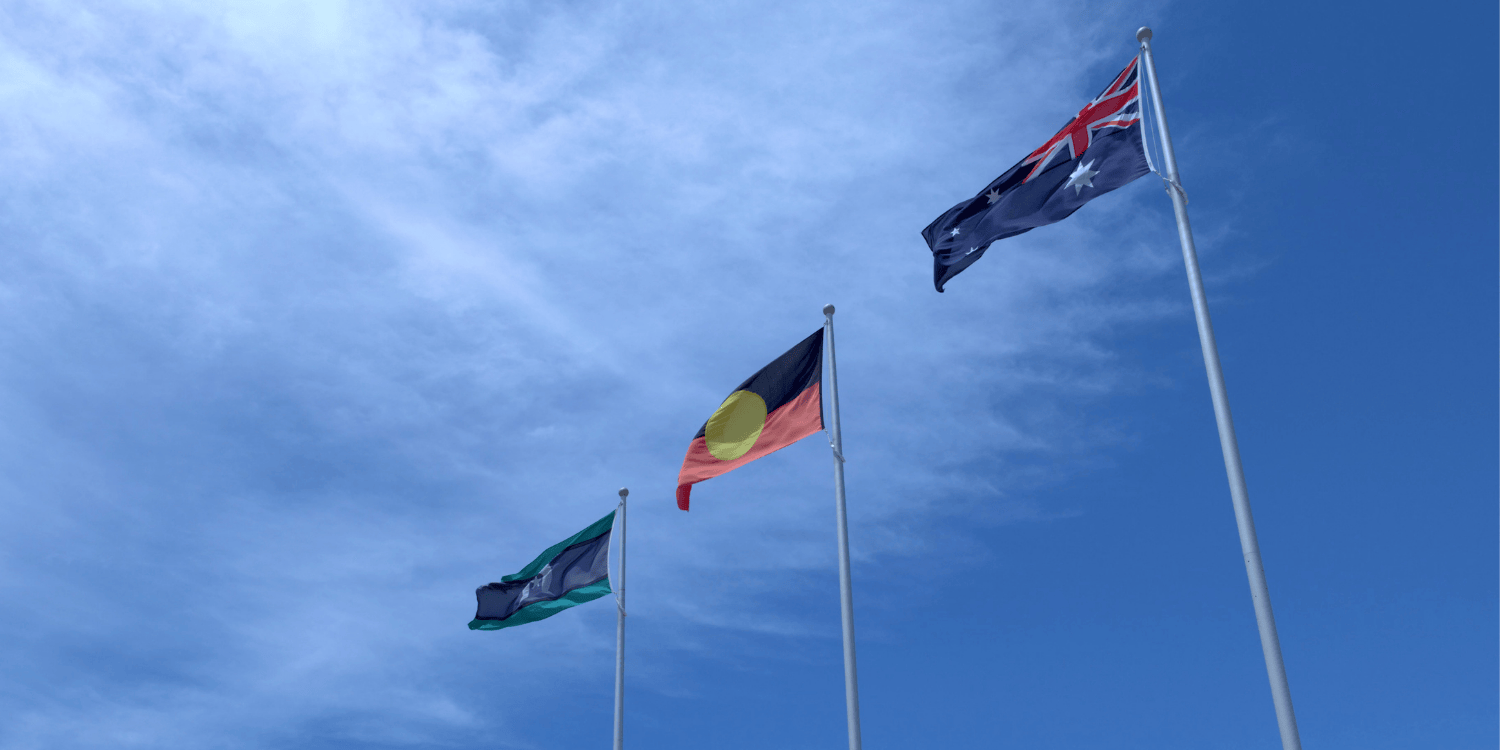
Principle 4 of the Early Years Learning Framework (EYLF V2.0) is Aboriginal and Torres Strait Islander Perspectives. This principle requires educators to embed First Nations knowledge, histories, and cultures into everyday early childhood practice. This principle applies to all early learning services, regardless of whether First Nations families are enrolled.
Why Embedding First Nations Perspectives Is Essential In Early Childhood
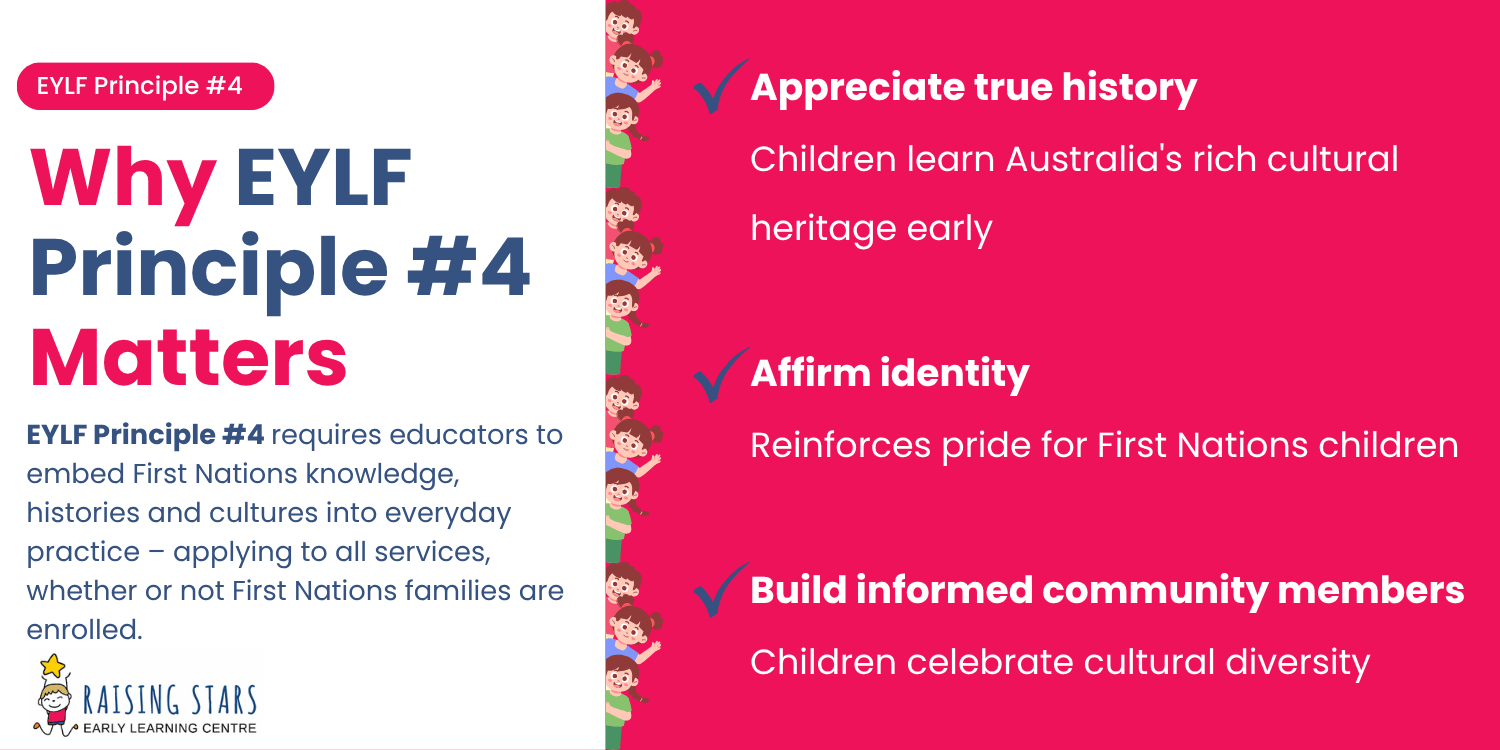
Embedding First Nations perspectives is essential in early childhood as it helps children appreciate Australia’s true history and rich cultural heritage from a young age. It also supports children to become informed community members who celebrate the diversity of Aboriginal and Torres Strait Islander peoples.
By acknowledging the strengths and capabilities of Aboriginal and Torres Strait Islander families it assists in reinforcing and affirming a positive sense of identity for Aboriginal and Torres Strait Islander children. It also helps educators to be responsive to children in ways that are affirming of their cultural identity, contributing to their pride and strength.
What Embedding Aboriginal And Torres Strait Islander Perspectives Actually Looks Like
Embedding Aboriginal and Torres Strait Islander perspectives into early childhood practice involves educators creating culturally safe places and working in intercultural ways through pedagogy and practice. Educators should seek out ways in which Aboriginal and Torres Strait Islander and western knowledge systems can work side by side, respectfully.
Educators should seek assistance through engaging with Aboriginal and Torres Strait Islander people on how to embed their perspectives into the service’s philosophy, curriculum planning and implementation. Educators should also grow their knowledge of Aboriginal and Torres Strait Islander kinship systems and the local cultural connections to build engaging reciprocal relationships between services and communities.
Strategies For Embedding Aboriginal And Torres Strait Islander Perspectives
For children under 2 years, the simplest way is to incorporate local Aboriginal and Torres Strait Islander words into daily songs and dance. You can also decorate the classroom with culturally accurate imagery and language. Once children reach 2 to 3 years, they have greater cognitive skills and it’s possible to incorporate reading picture books and sharing art or artifacts created by First Nations authors and artists.
As children become older and more aware, with improved numeracy and literacy skills, from around 3 to 6 years of age they can engage in daily Acknowledgement of Country practices, as well as explore local natural materials and learning through storytelling.
Start With Local Community Connection, Not Resources
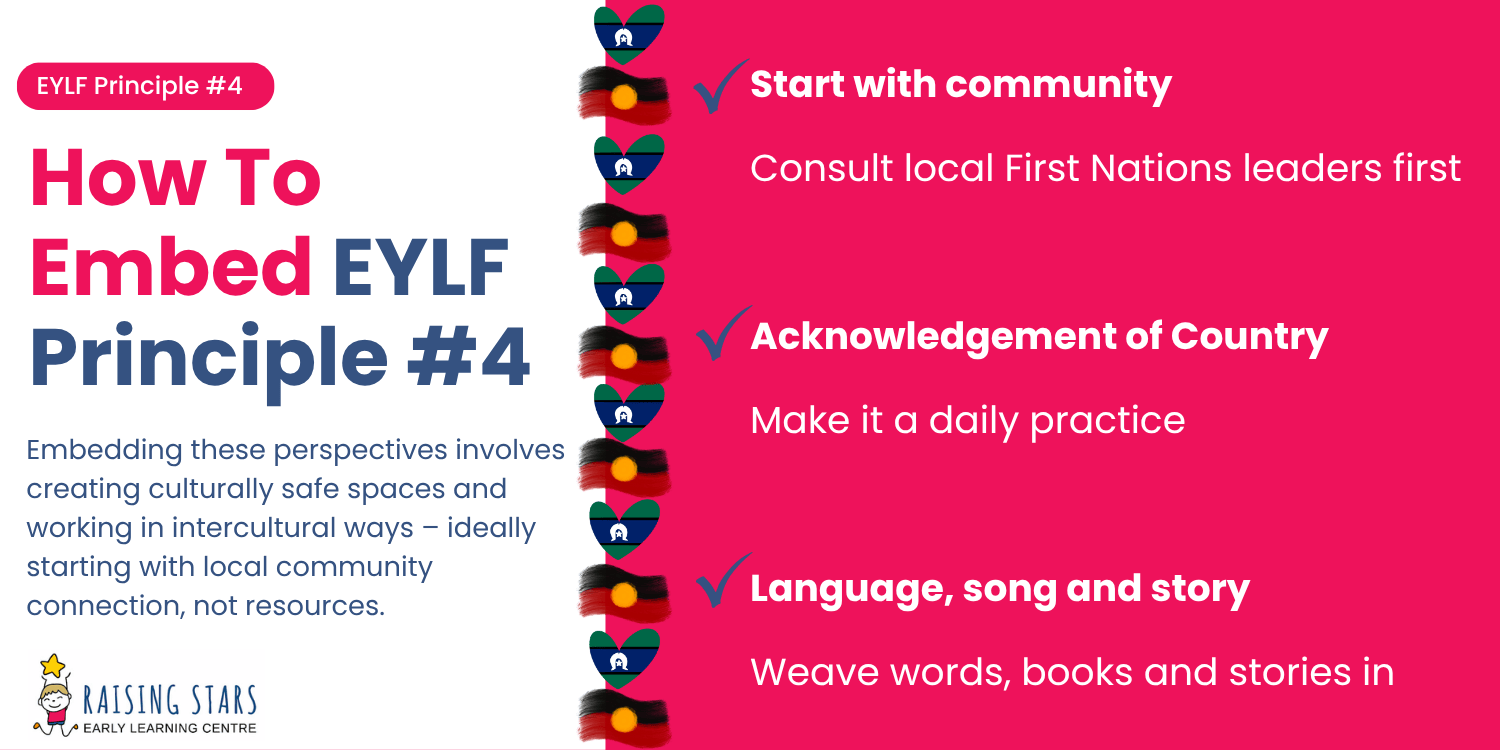
Before investing in learning resources, a respectful way to start embedding Aboriginal and Torres Strait Islander perspectives into the learning outcomes of students is to consult with local first nations leaders to understand their point of view and the unique elements of their culture within your area. They will have important viewpoints and knowledge that will be specific to the local Aboriginal and Torres Strait Islander experience. Where possible, involve them in the development of the curriculum.
Audit Your Environment And Resources
The classroom environment will typically have various posters, books, decorations and other learning resources that are used to educate, inspire and motivate the students. By including elements across all learning tools that reflect Aboriginal and Torres Strait Islander culture, knowledge and perspectives, students will have more frequent engagement with it. This will help to normalise their perception of First Nations culture and history.
Acknowledgement Of Country As Daily Practice
An Acknowledgement of Country is a way for teachers, students and support staff to show respect for the Traditional Owners and Custodians of the land where they are located. By commencing each day by conducting an Acknowledgement of Country it shows that respect and appreciation for first nations people, culture and perspectives is central to their beliefs.
Language, Song And Story
Educators should look to integrate Aboriginal and Torres Strait Islander words, songs and stories into the curriculum or classroom activities. Simple phrases, such as greetings or everyday words to describe things children might encounter, such as birds or plants, can be taught and used. Include books and other resources that explore First Nations stories and culture, and learn songs as a fun means for children to embrace the language of Aboriginal and Torres Strait Islander peoples.
Develop A Reconciliation Action Plan
Educators should actively research the wider Australian reconciliation plan and what is occurring in society and the community. Educators need to be committed to the service’s reconciliation journey and implement applicable elements in the learning environment. It might be necessary for them to develop their own Reconciliation Action Plan that is specific to their local area and is done in consultation with traditional owners and Aboriginal and Torres Strait Islander leaders.
Invest In Educator Professional Learning
Ongoing education and training for teachers and support staff enables schools to maintain an understanding of the most up to date research and processes regarding how best to embed First Nations knowledge, histories, and cultures into everyday early childhood practice. By investing in educator professional learning on the subject, it removes barriers for them to be able to embrace this foundational pillar of the EYLF framework.
Final Thoughts
Aboriginal and Torres Strait Islander Perspectives are fundamental to the learning outcomes of students. By embedding them into the everyday practice of schools and classrooms it helps children appreciate Australia’s history and rich cultural heritage. It also supports children to become informed community members who respect and celebrate the diversity of Aboriginal and Torres Strait Islander peoples.