Australia has come a long way in embracing multiculturalism and racial diversity – but every so often, cultural biases can still appear in workplaces, communities, and even in schools.
As early learning Educators, we are responsible for safeguarding the well-being and cultural identity of children in childcare. To that end, we practice cultural safety at each of our childcare centres.
What is Cultural Safety in Childcare?
In the context of childcare, cultural safety refers to creating an environment where children and families can freely express themselves without fear of experiencing discrimination, denial, or dismissal of their culture.
In addition to inclusive practices, cultural safety also involves taking preventative measures against acts of racism or discrimination against children and families.
Educators and childcare staff practice cultural safety in all aspects of operations, including curriculum planning, teaching approaches, and communication with children and families.
The Importance of Cultural Safety in Childcare
The importance of cultural safety is closely linked to the three core themes of the Early Years Learning Framework (EYLF) – Belonging, Being and Becoming.
For children, being able to understand and express their cultural identity is essential developing a strong sense of belonging in the community, and feeling accepted for who they are.
When children experience negative reactions or treatment with regard to their cultural background, they can feel ashamed and develop an aversion to connecting with their culture.
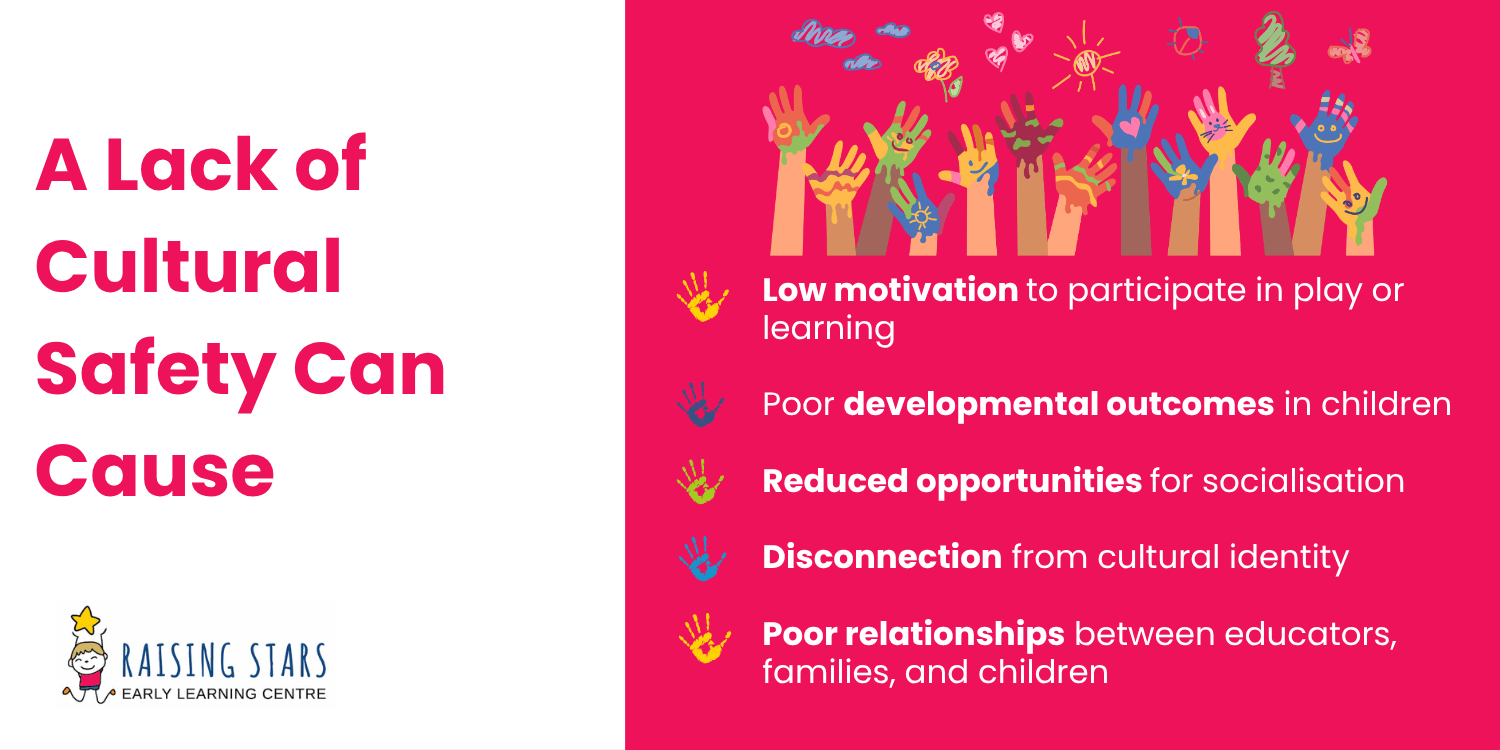
A lack of cultural safety in childcare settings can cause:
- Low motivation to participate in play or learning in children
- Poor developmental outcomes in children
- Reduced opportunities for socialisation
- Disconnection from cultural identity
- Poor relationships between educators, families, and children
Many of these implications can persist even after children have left childcare and started attending school. In some cases, overly negative experiences can form a warped perception of cultural identity in children.
Cultural safety actively supports children to feel proud of and connected with their culture, and works alongside parental guidance to shape their individual identity.
How Do Early Learning Centres Ensure Cultural Safety?
Cultural safety practices in early learning centres are implemented by Educators and staff through policies, planning approaches, training, and in collaboration with families.
Policies
Early learning centres have policies in place to ensure cultural safety is practiced by Educators and staff. These policies set the expectations for cultural safety and provide more transparency for families with attending children.
Planning approaches
Early learning centres embed cultural safety into their programming by incorporating diverse languages, perspectives, and cultural practices into daily routines and activities. Educators select books, music, and materials that reflect the backgrounds of attending children and acknowledge a range of cultural events.
Training
Educators and staff undertake ongoing training to build cultural competency and recognise unconscious bias, particularly learnings around Aboriginal and Torres Strait Islander histories and cultures.
Collaboration with families
Early learning centres partner with families to better understand children’s cultural backgrounds. Educators may hold discussions with families to share their languages, customs, and values, and consider them in planning and daily practice.
Examples of Cultural Safety Practices in Childcare
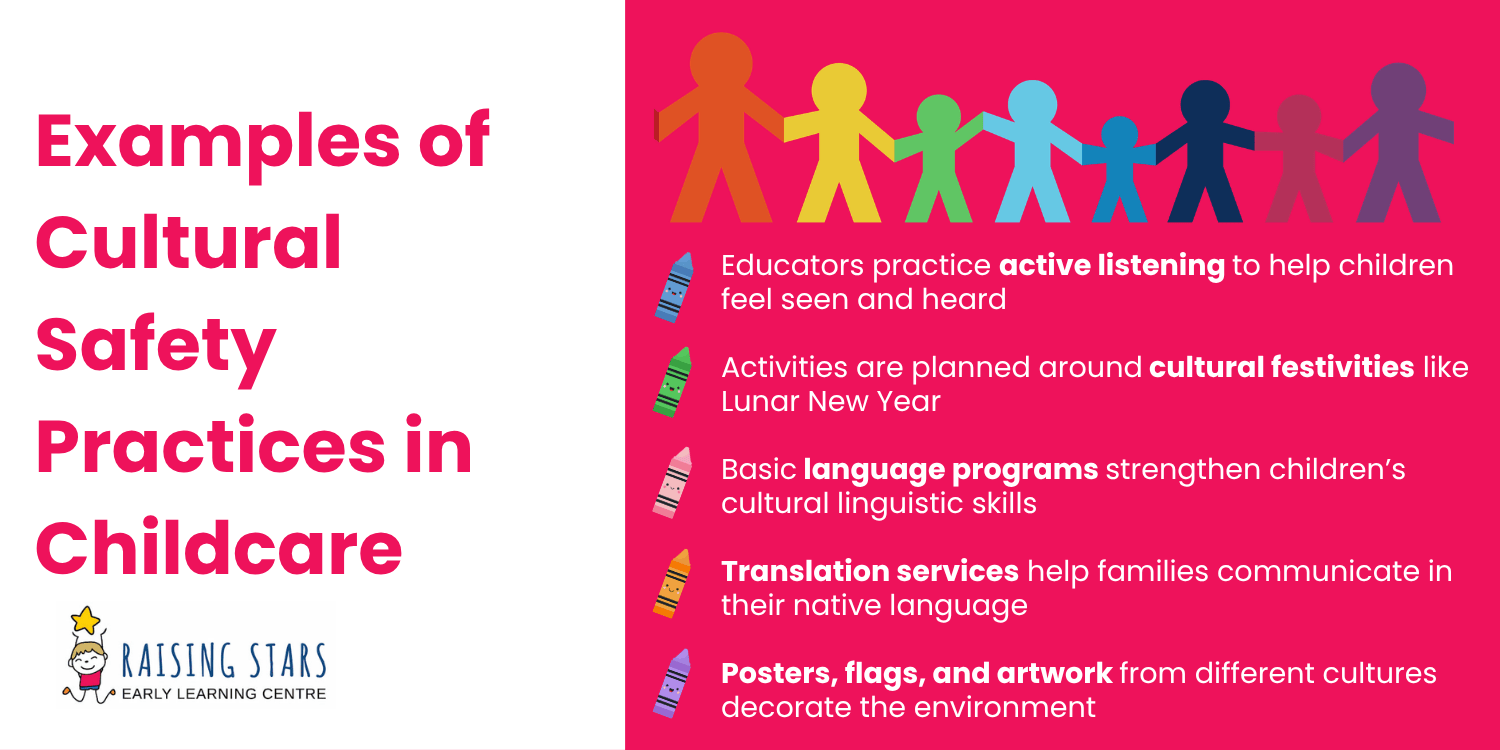
Taking time to listen
Educators give children the space and opportunity to share stories about their own culture, and practice active listening to help children feel seen and heard. The same approach is also extended to parents during meetings or pickup/dropoff to build a greater understanding of cultural values.
Celebrating cultural events
Childcare centres plan activities around cultural festivities such as Lunar New Year in Chinese culture and the Carnevale Italian festival to build a connection in children with their respective cultural backgrounds. These cultural events also provide children from other backgrounds with a more diverse exposure of different cultures and traditions, encouraging cultural appreciation.
Language learning
Early learning centres like Raising Stars offer basic language programs for Mandarin and Italian, which strengthen the cultural linguistic skills of attending children.
Translation services
Educators may provide translation services and communicate with families in their native language where possible to make collaboration easier and build trust.
Displaying cultural elements in the learning environment
The centre’s environment can be decorated with posters, flags, and artwork from different cultures, or use multilingual signage to create a more culturally diverse learning space for children.
Culturally-appropriate values
Educators consider the specific values of each child’s cultural background when providing correction, guidance, or setting behavioural expectations. This ensures a consistent approach between the centre and home, supporting children’s sense of security and identity.